Accessibility Is the Fan Journey
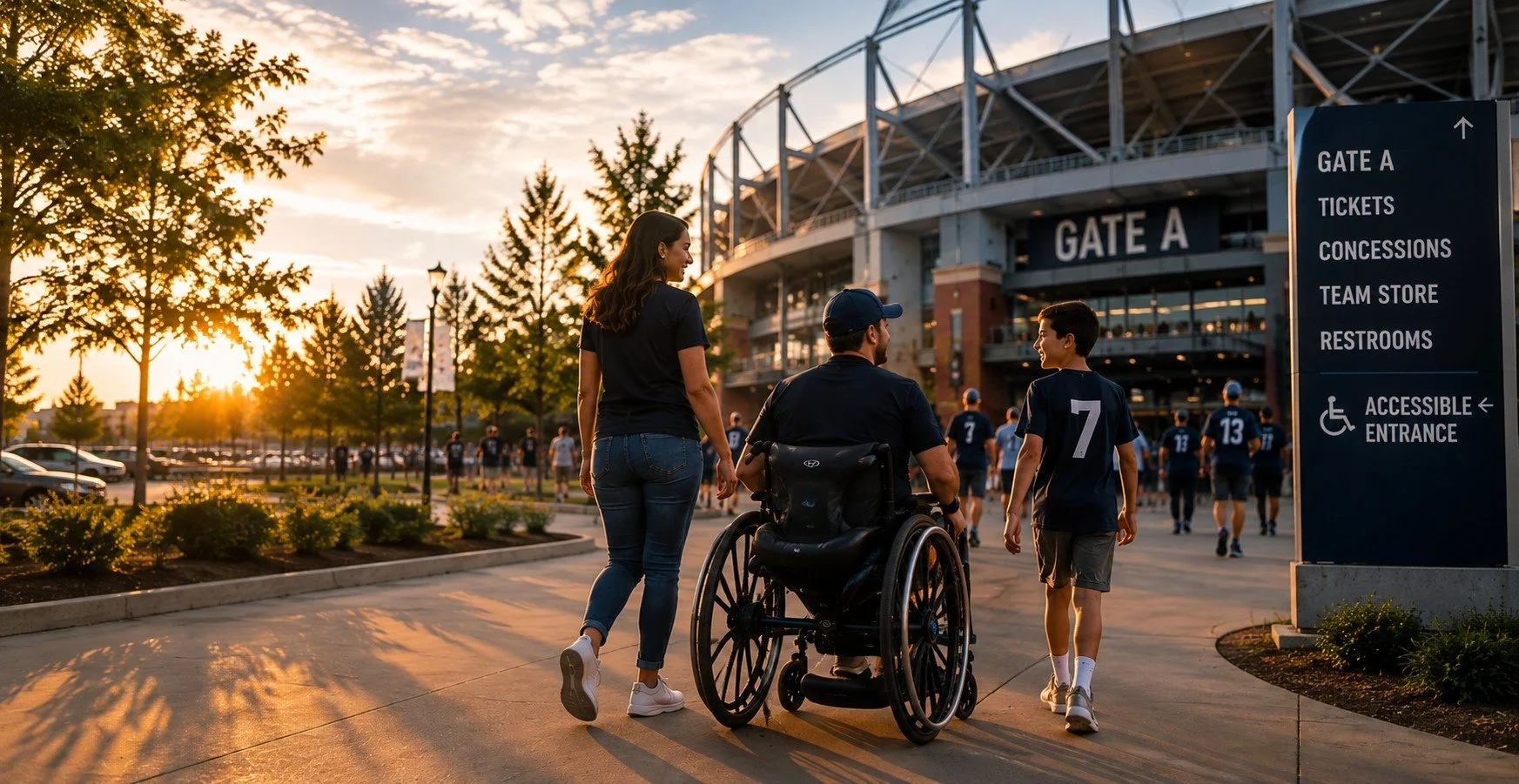
When most people imagine accessibility at a sports venue, they often picture a wheelchair ramp. They’re not wrong. But they’re not seeing the whole picture.
Ramps, elevators, accessible parking spaces, and accessible seating are visible reminders that a venue has considered accessibility. But accessibility isn’t a ramp. It isn’t an elevator. It isn’t a designated parking space.
It’s every interaction a fan has before, during, and after the game. It’s the ability to participate in the same excitement, traditions, and memories that make attending live sports so special.
So what actually is accessibility through the eyes of a fan?
Accessibility is the entire fan journey.
The Fan Journey
A fan’s experience doesn’t begin when they arrive at the stadium. It begins days or even weeks before game day. They don’t experience it one feature at a time. They experience it one moment at a time.
The decision to attend.
Finding accessibility information.
Purchasing tickets for the seats that will meet their needs.
Planning where to park.
Finding the right entrance.
Navigating to their seat.
Interacting with staff.
Obtaining any necessary disability aids.
Ordering drinks and food.
Viewing the game.
Using the restroom.
Shopping their team’s gear.
Leaving safely after the game.
Every one of these moments can either create a positive experience or build another barrier to navigate.
That’s accessibility.
Parking isn’t just Parking
Parking is often the very first interaction a fan has with a venue. For many fans with disabilities, it’s far more than finding an open space.
It’s finding the accessible lot.
It’s locating a space that will work for you.
It’s knowing there is enough room to deploy a wheelchair ramp.
It’s navigating the route to the entrance.
It’s knowing the path will work for you.
The parking space is the feature. The journey of finding it and reaching the entrance creates the accessible parking experience.
Entry Isn’t just Finding the Door
It’s finding the accessible entrance.
It’s getting to the entrance without encountering barriers.
It’s getting through the entrance independently.
It’s navigating security with mobility devices, service animals, or disability-related equipment.
The accessible entrance is the feature. The journey of getting to it and through it creates the accessible entry experience.
Seating Isn’t just Finding a Seat
It’s having seating information available before purchasing a ticket.
It’s reaching the seats without obstacles.
It’s ensuring you have a clear view of the game.
It’s sitting with the people you came to enjoy the game with.
Accessible seating is the feature. The journey of getting the right seats and enjoying the game creates the viewing experience.
Concessions Aren’t just Buying Food
It’s lines that are wide enough to navigate.
It’s service counters that are low enough to reach.
It’s being able to read the menu.
It’s being able to successfully get your food and drinks back to your seat.
The service counter is the feature. The journey of ordering, receiving, and returning to your seat creates the concessions experience.
Staff Interaction Isn’t just Customer Service
Sometimes the greatest accessibility feature isn’t physical at all. It’s a staff member who knows how to help.
It’s someone who knows where accessible entrances are located.
It’s someone who understands companion seating.
It’s someone who can communicate effectively with a guest who is deaf or hard of hearing.
It’s someone who recognizes their interaction can completely change a fan’s experience.
Staff training is the feature. The journey of every positive interaction creates the accessible fan experience.
Rethinking Accessibility
Venues already devote tremendous effort to creating a memorable fan experience. They carefully plan ticketing, parking, wayfinding, concessions, staff interaction, and countless operational details. Accessibility shouldn’t exist alongside those conversations. It should be part of them because every operational decision eventually becomes part of someone’s fan experience.
A venue can meet accessibility requirements and still leave fans frustrated, uncertain, or excluded from parts of the game-day experience.
Fans don’t evaluate accessibility by checking off a list of ADA features. They remember how easy or difficult it was to attend a game. They remember whether they felt confident before arriving, whether they could navigate the venue independently, and whether they felt welcome.
Accessibility isn’t just about features. It’s about how those features support the journey that ultimately creates the fan experience. When venues think about accessibility feature by feature, they miss how fans actually experience accessibility. Fans experience accessibility as one continuous journey.
The best way to evaluate accessibility isn’t by asking whether a venue has the right features. It’s by asking whether every fan can confidently navigate the entire journey.
Questions to Consider at Your Venue
If you experienced your venue for the first time as a fan with a disability, what moments would create confidence, and what moments would create uncertainty?
Does your team evaluate accessibility feature by feature, or as one continuous fan journey?
Are accessibility considerations integrated into your procedures for ticketing, parking, wayfinding, concessions, and staff training?
Interested in evaluating accessibility through the eyes of your fans?
Access At Ease helps sports venues improve accessibility through accessibility assessments, Accessibility Fan Guides, and staff training that build confidence throughout the fan journey.
About the Author
Andy Garbarino is the founder of Access At Ease, an accessibility consulting firm that helps sports venues evaluate accessibility through the eyes of their fans. As a lifelong sports fan and a person with a disability, he combines lived experience with practical recommendations to help venues create more inclusive and confident game-day experiences.